
Crypto Becomes Core to Venezuela’s Economy - But Creates New U.S. Sanctions Risks: TRM Report
Venezuela now relies heavily on USDT and P2P crypto trading, which TRM warns could support sanctions evasion efforts.

Crypto Laddin
Author
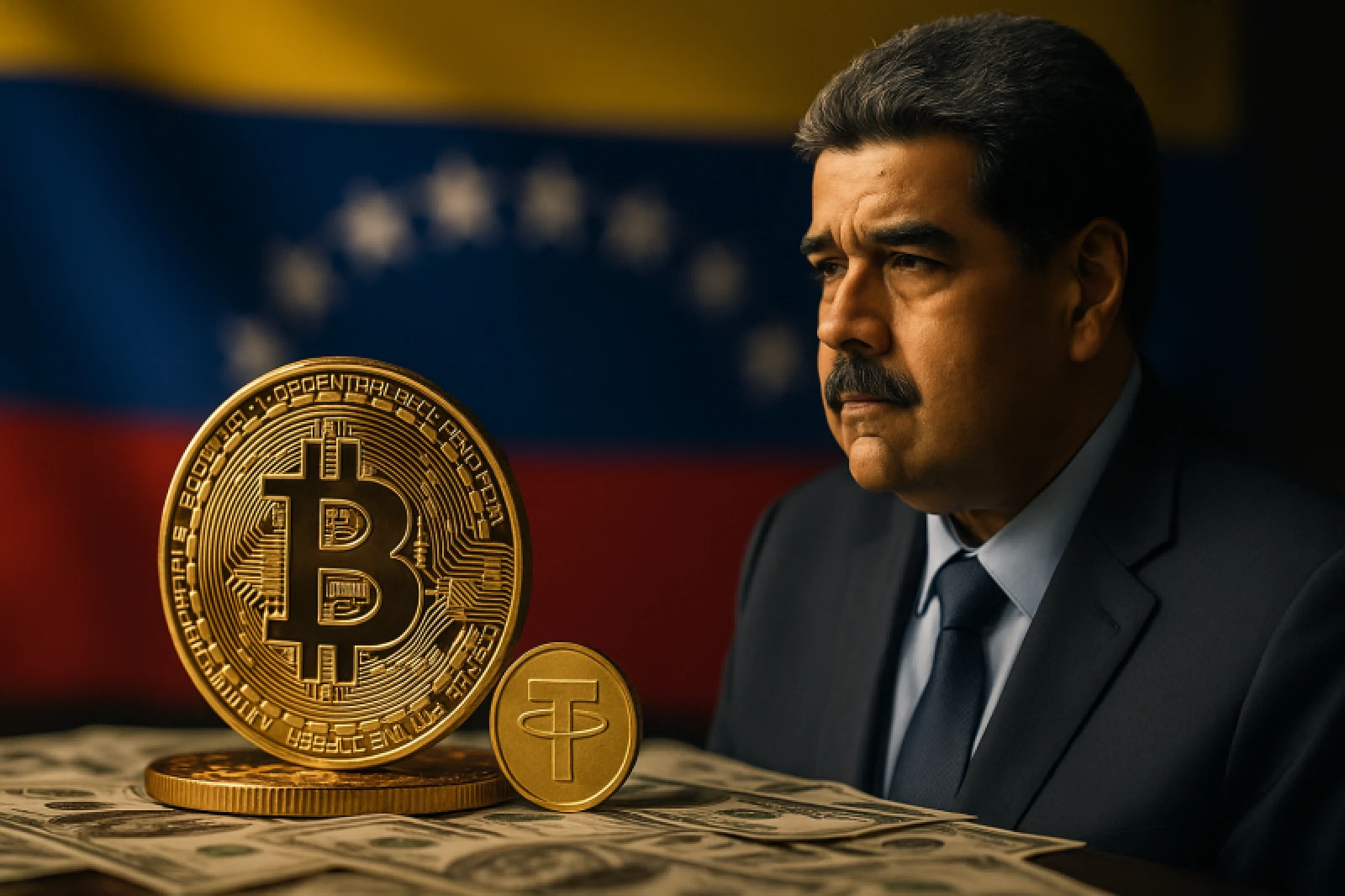
A new report from TRM Labs reveals that cryptocurrency has become central to Venezuela’s economic survival, reshaping how both the state and citizens operate under years of financial isolation. With aggressive U.S. and allied sanctions cutting the nation off from global banking, Venezuela has increasingly turned to USDT stablecoin transactions and informal peer-to-peer crypto markets as its primary financial infrastructure.
According to TRM, Venezuela’s crypto ecosystem is now so large and deeply embedded that it functions as an alternative financial rails system, largely outside the control of regulators and traditional banks. One single P2P platform reportedly accounted for 38% of all internet traffic from Venezuelan IP addresses, highlighting the scale of the shift toward decentralized, low-KYC trading networks.
Ari Redbord, TRM’s Global Head of Policy and a former U.S. Treasury official, describes this development as a double-edged sword. He argues that crypto provides a crucial lifeline for Venezuelans who lack reliable financial services, yet simultaneously opens the door for sanctions evasion, enabling the Maduro regime and affiliated actors to bypass traditional banking restrictions.
The report also highlights the weakened condition of SUNACRIP, Venezuela’s regulatory agency for digital assets, which has been undermined by corruption scandals and restructuring efforts. This has resulted in a largely unregulated environment in which informal crypto markets thrive and oversight remains minimal.
Venezuela was once an early state-level adopter of blockchain technology. The government launched the Petro cryptocurrency in 2018, backed by oil and mineral reserves, in an attempt to stabilize the collapsing bolivar. However, after years of controversy and minimal adoption, the Petro was officially discontinued in 2024, leaving Venezuelans even more reliant on independent stablecoins like USDT.
Geopolitical tensions between the U.S. and Venezuela have intensified sharply. President Donald Trump recently refused to rule out the possibility of deploying American troops to overthrow the Maduro government. Meanwhile, the U.S. seized a sanctioned oil tanker off Venezuela’s coast this week—a move analysts call a “serious escalation” in the standoff.
TRM’s analysis concludes that crypto is now an irreversible structural component of the Venezuelan economy. As sanctions tighten and access to international banking shrinks further, the use of USDT and P2P crypto markets is expected to grow. TRM calls for nuanced U.S. policy solutions that balance humanitarian needs with measures to prevent crypto-enabled sanctions evasion.