

Indian Rupee Becomes Asia’s Worst Performer — But There’s a Strategic Upside
The Indian rupee leads Asia’s currency losses in 2025. While trade talks and foreign exits pressure markets, exports gain from a weaker rupee.

Crypto Laddin
Author
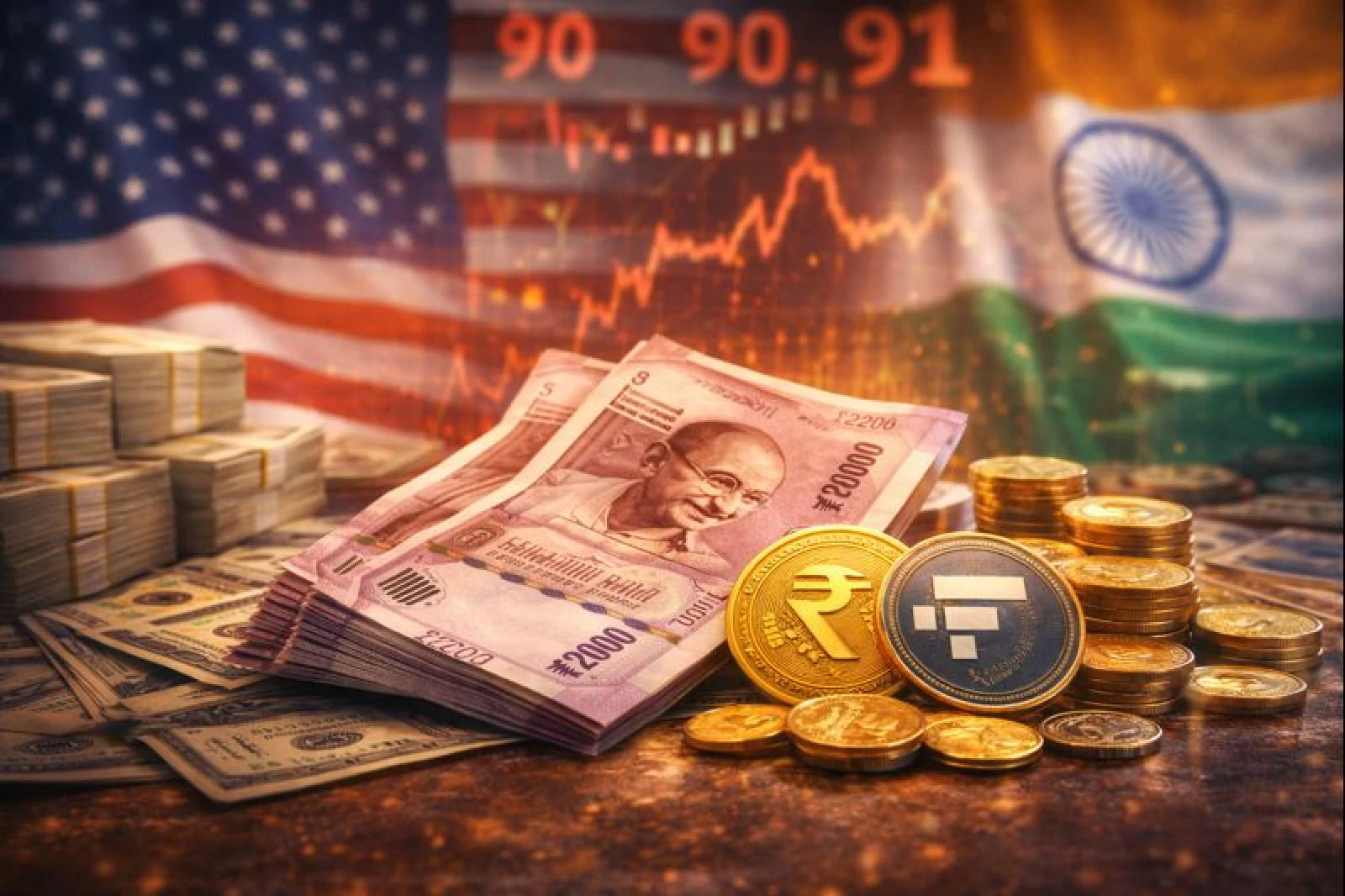
The Indian rupee has emerged as Asia’s weakest-performing currency in 2025, reflecting mounting pressure from stalled trade negotiations with the United States and sustained foreign capital outflows. The currency has fallen from 85.64 per dollar at the start of the year to around 89.6, with forecasts from Nomura and S&P Global Market Intelligence warning of a possible slide toward 92 per dollar by the end of March.
At the core of the depreciation lies persistent uncertainty surrounding U.S.–India trade relations. India maintains tariffs as high as 50%, making it one of the most heavily protected economies globally — even surpassing China in some categories. These barriers have complicated negotiations with Washington and weighed heavily on export performance. After tariffs took effect in August, Indian exports to the U.S. dropped nearly 12% in September and 8.5% in October, before rebounding sharply by 22.6% in November.
Nomura’s Chief Economist for India, Sonal Varma, warns that prolonged policy uncertainty risks deterring multinational manufacturers, particularly those targeting the U.S. market. If tariffs remain elevated, India could miss out on global supply chain reallocation opportunities. A weaker rupee also raises import costs, potentially fueling inflation if the trend continues.
Foreign investor behavior has intensified the pressure. Data from India’s National Securities Depository shows over $10 billion in capital outflows across asset classes in 2025, with nearly $18 billion pulled from equities alone. The rupee recently breached the psychologically important 90-per-dollar level and slid rapidly toward 91, underscoring the speed of the sell-off.
Still, the situation is not entirely negative. A depreciated rupee improves India’s export competitiveness, making its goods cheaper on global markets. Combined with relatively contained domestic inflation, India retains some buffer against rising import prices. S&P Global’s Hanna Luchnikava-Schorsch notes that the rupee appears undervalued, but a meaningful recovery depends on clarity around a U.S.–India trade deal, which her team expects within six months.
Although the Reserve Bank of India has emphasized market-driven exchange rates, reports suggest it has recently intervened aggressively to curb excessive volatility. Until concrete progress emerges on trade negotiations, the rupee is likely to remain under pressure. However, analysts argue that this period of weakness could ultimately translate into long-term gains by strengthening exports and supporting economic resilience.