

Venezuela’s $60 Billion “Shadow Bitcoin Reserve” Could Reshape Global BTC Markets
An alleged Venezuelan Bitcoin reserve could dramatically impact BTC supply dynamics and long-term price action heading into 2026.

Crypto Laddin
Author
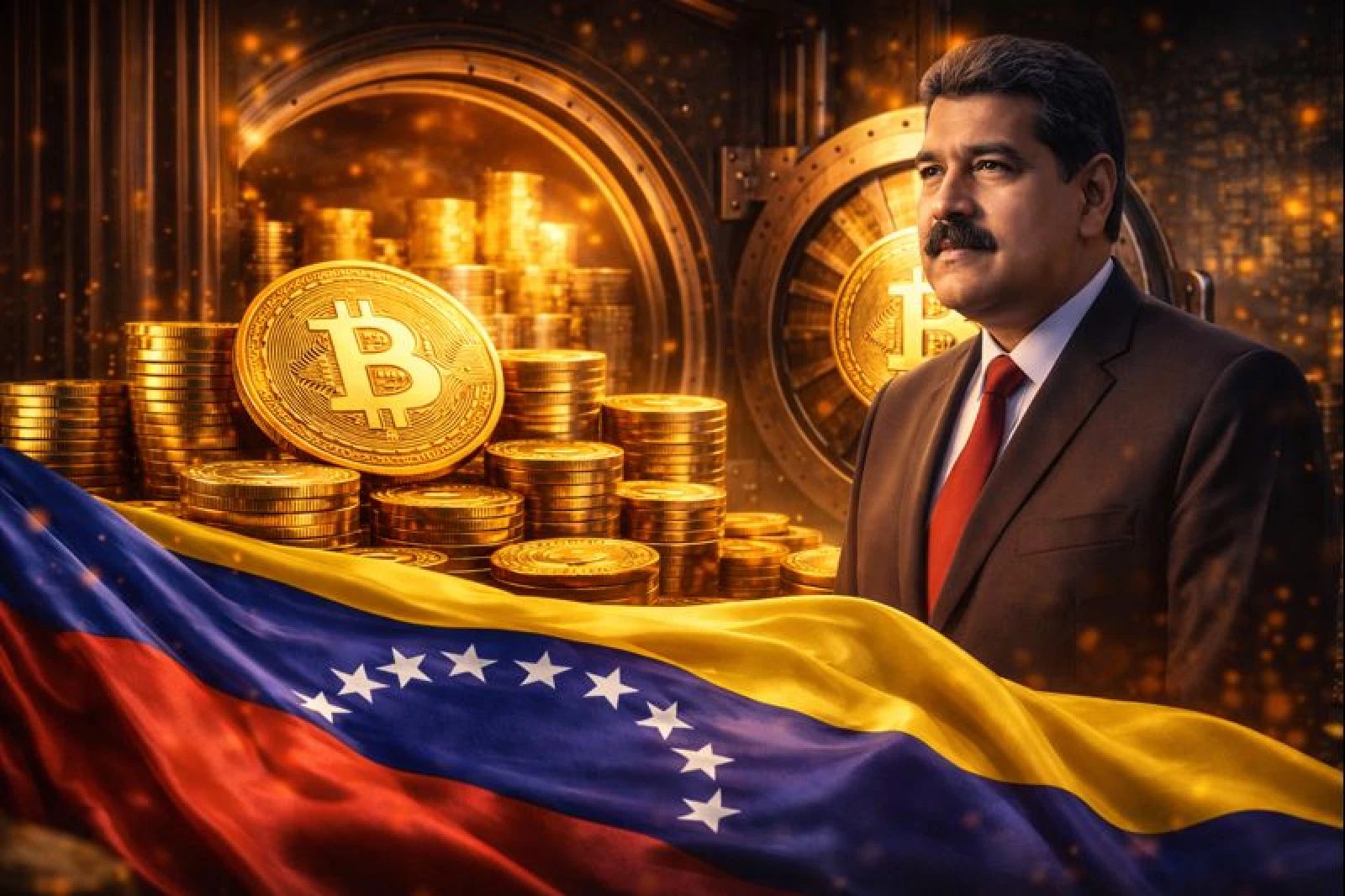
Venezuela’s long-rumored “shadow Bitcoin reserve” has emerged as a potentially critical factor for global crypto markets following major political developments in early 2026. A U.S.-led operation in January 2026 that resulted in the arrest of President Nicolás Maduro has intensified scrutiny around the country’s hidden digital assets.
According to intelligence sources and blockchain analysts, Venezuela may control between 600,000 and 660,000 BTC, a stash valued at approximately $60–67 billion at current prices. If confirmed, this would place the country among the largest Bitcoin holders in the world, rivaling institutional giants such as MicroStrategy and BlackRock.
Reports suggest that the foundation of this reserve was laid between 2018 and 2020, when Venezuela conducted large-scale gold swap operations from the Orinoco Mining Arc. Proceeds from gold exports—estimated at around $2 billion—were allegedly converted into Bitcoin at average prices near $5,000, forming the backbone of the state’s covert BTC holdings.
Following the collapse of the state-backed Petro cryptocurrency, the Maduro administration reportedly mandated that PDVSA oil exports be settled in USDT. To mitigate sanctions risk and reduce exposure to the U.S. dollar, these stablecoins were subsequently converted into Bitcoin. Additional accumulation reportedly came from state seizures of domestic mining operations.
As a result, Venezuela’s estimated Bitcoin holdings now represent nearly 3% of Bitcoin’s circulating supply. For comparison, Germany’s sale of 50,000 BTC in 2024 triggered a sharp market correction—highlighting the magnitude of the potential impact Venezuela’s reserve could have.
Market observers outline three possible outcomes for these assets:
-
Legal freezing of the Bitcoin,
-
Incorporation into a U.S. Strategic Bitcoin Reserve,
-
or auction-based liquidation (considered less likely).
Analysts believe freezing or strategic reserve inclusion is the most probable scenario. Such a move could effectively lock up supply for 5–10 years, creating sustained bullish pressure on Bitcoin prices and reinforcing the scarcity narrative.
Beyond market implications, Venezuela’s case underscores the country’s grassroots crypto adoption. By late 2025, roughly 10% of retail payments and 40% of peer-to-peer transfers were conducted using crypto assets, driven by hyperinflation, sanctions, and currency collapse.
While Maduro’s arrest introduces political uncertainty, analysts note that until private keys are transferred or legal processes conclude, this massive Bitcoin reserve is likely to remain effectively inaccessible. Short-term volatility may follow, but over the long term, Venezuela’s shadow reserve could become one of the most significant supply shocks in Bitcoin’s history.