

BonkFun Hack Attack: Crypto Drainer Script Targets Solana Memecoin Launchpad
A phishing attack targeting BonkFun’s domain tricked users into signing a malicious transaction, allowing attackers to drain crypto wallets.

Crypto Laddin
Author
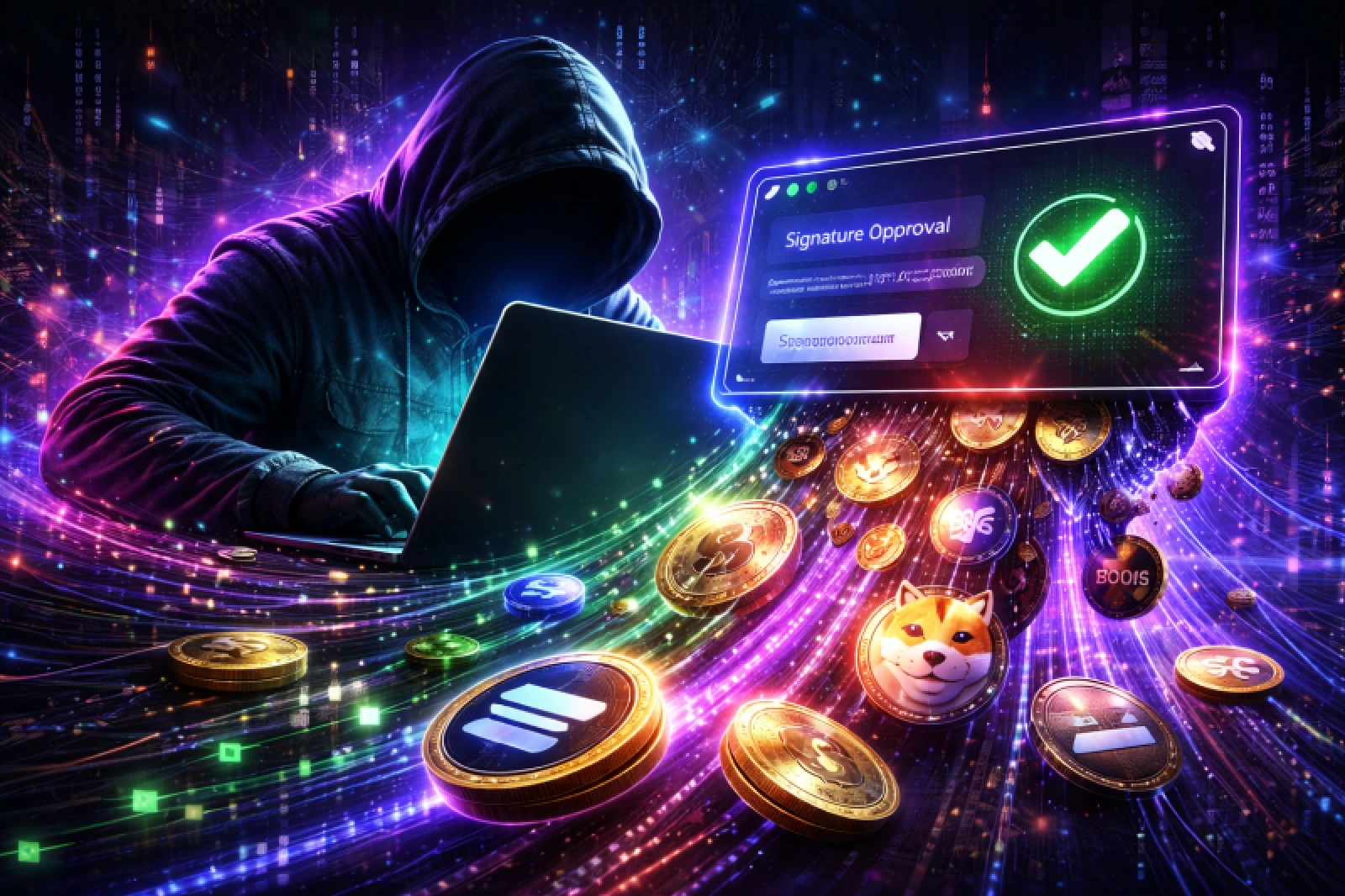
The Solana-based memecoin launchpad BonkFun recently became the target of a sophisticated phishing attack that highlights the growing security challenges within the cryptocurrency sector. Malicious actors reportedly hijacked the platform’s official domain and deployed a crypto-draining malware script designed to steal funds from unsuspecting users.
The attack reportedly began after hackers gained access to one of the platform’s team accounts. This access allowed them to take control of the BonkFun domain and modify the website’s behavior. Once the attackers controlled the domain, they installed a malicious script that targeted visitors connecting their crypto wallets.
Users visiting the compromised website were presented with what appeared to be a legitimate Terms of Service or compliance confirmation message. The message mimicked routine platform verification procedures commonly seen on decentralized applications.
However, the message was actually a trap. When users signed the request through their wallets, they unknowingly granted attackers permission to execute transactions on their behalf. This allowed the attackers to quickly drain cryptocurrency assets from the victims’ wallets within seconds.
Such attacks are commonly referred to as “crypto drainer” exploits, where malicious smart contract interactions are disguised as legitimate confirmations. Once the user signs the transaction, the attacker gains control over the wallet’s tokens.
After detecting the breach, the BonkFun team issued a warning advising users not to interact with the platform through its domain until security measures were restored. The team has not yet confirmed the exact number of affected users or the total value of stolen crypto assets.
BonkFun’s operator Tom clarified that only users who signed the fake compliance message were affected by the attack. According to him, individuals who had previously connected their wallets or those trading BonkFun tokens on external trading terminals were not impacted.
Tom also stated that the platform’s team quickly identified the compromise and spread warnings across the community to minimize damage. According to initial estimates, the losses appear to be relatively limited compared with other major crypto hacks.
The incident highlights the rapid rise of phishing attacks within the cryptocurrency industry. Security reports indicate that scammers are increasingly leveraging advanced tools and artificial intelligence to conduct more convincing attacks.
Malicious actors now frequently use generative AI to create fake investment websites, realistic phishing emails, and automated chatbots that impersonate legitimate services. These tools make scams significantly more difficult for average users to detect.
In many cases, such attacks are part of broader fraud strategies such as “pig butchering” schemes, where scammers build trust with victims over time before convincing them to invest funds into fraudulent platforms.
The financial impact of these scams has grown dramatically. Reports suggest that crypto phishing attacks alone resulted in losses exceeding $17 billion in 2025, representing a massive 1,400% increase compared to the previous year.
This latest incident comes at a time when the broader cryptocurrency market is already facing uncertainty. Over the past week, Solana’s price has declined by about 5.47%, although it has recorded a modest 1.5% gain in the last 24 hours. Meanwhile, Bitcoin has fallen roughly 3.59% over the past week, currently trading near the $70,000 level.
The BonkFun attack serves as another reminder that security awareness remains critical in the crypto ecosystem, especially when interacting with decentralized applications and signing wallet transactions.